

*This is Day 3 of a 3-lesson series called “How I Introduce Meditation to English Learners”
Language Level: Intermediate/Advanced
Time: 50-60 minutes
I. Warm-Up (5 min)
Review body parts from last class, using Body Scan Vocab Review. Show images and have students shout out their guesses:
Repeat the 3-minute Body Scan meditation from last week:

II. Student Questions (10-15 min)
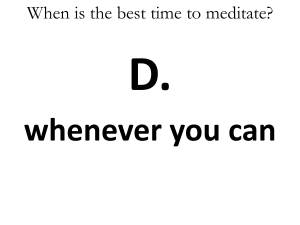
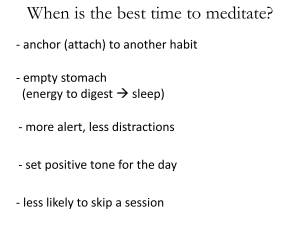
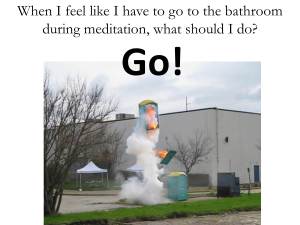
Go through the Student Meditation Questions PPT with the whole class. The questions were compiled from student exit tickets on Day 1. These are questions about meditation that multiple students asked:






III. Laughing Meditation (15-20 min)
Transition to laughing meditation by telling students that we are going to explore some of the varieties of meditation that we saw in the PPT. Hand out Laughing Meditation Gap Fill and have students work in pairs to guess the gaps.
Hey everybody! It’s Mandee Lee, and today we’re gonna do a laughing meditation.
So, laughing meditations are really great for getting you into your body when you’re really in your head, for letting your inner (1) c_________________ come out, letting yourself play and not taking life too
(2) s__________________ly, and just laughing, bringing the lightness to it. There’s three different stages of the laughing meditation and I’m gonna go over them with you now.
Stage number one is, you want to warm yourself up the way you would for an (3) ex______________ or a sport. So, you’re gonna move your face around and make lots of silly faces. You’re gonna make animal noises so that you warm up your vocal cord and you’re gonna stretch your body a little. It’s gonna look like this. To the right. And to the left. Now let’s stretch our face, ready?
Animal noises. Moooo. Meoow. Bwok bwok bwok. Rarf rarf rarf. Awooo.
Now that we’re (4) w_____________ up, stage number two, which is laughter for five minutes straight. Even if it’s not genuine, just laugh. Just (5) m______________c other people’s laughter that you’ve seen before and just let it rip.
(let it rip = go ahead; give it a try)
I’m gonna give you three or four different types of laughs that you can do as your go-to, if you run out of ideas, just come back to these laughs. Laugh number one is the Knee-Slapper. Laugh number two is Ho, Ha, Hee. Laugh number three is the Nasal Laugh. And laugh number four is the (6) Mad Sc_____________ Laugh.
(go-to = reliable option; something you know well how to do)
And after your five minutes of laughter is the third stage where you close your eyes and just let yourself feel the aliveness in your body, feel your heart beating, feel the energy moving throughout your body and just center yourself and move on with with your day.
Max: So, thanks so much for laughing with us today. We hope it (7) br______________ed up your day and you got a new little practice that you can use to lift your (8) sp________________s. Share this video with all of your friends. Lighten up their day. Add some laughter into their day and then comment below and let us know what’s your favorite laugh. Maybe you’ve got one of your own to share.
After they’ve made their guesses, show the Laughing Meditation video. Check answers together.

Ask students to turn over their handout and have a little discussion with their partner about the video. Partner A should explain the first stage of laughter meditation. Partner B should explain the second. Partner A should explain the third. Partner B should share their opinion of the video, and then invite Partner A to do the same. Set timer for 4 minutes, and tell students they should aim to keep the conversation going for the full time.
Bring the class together and share some opinions of the video. Then tell students we are going to practice a micro laughter meditation. We will meditate (laugh!) for 1 minute without stopping. Students can practice the “go-to” laughs from the video or invent their own. Set the timer for 1 minute, and let the chaos ensue.
After the micro laughter meditation, ask some students to share how they feel.
IV. Gratitude Meditation (15-20 min)
Transition to gratitude meditation by telling students that we’re going to finish our meditation unit with one final type of meditation – a gratitude meditation. Review the meaning of gratitude and grateful.
Pre-teach some challenging vocabulary they will hear, including: elongate, anchor, belly, inhalation, exhalation, signifying, and convey.
Play the Gratitude Meditation audio, and let students follow along. After the 5-minute meditation, ask some students how they feel about it.
In the last couple minutes of class, have students mingle and express their gratitude to as many classmates as they can. Students should use the simple sentence starter: “I appreciate you because …”
Thank the class for their participation and positive attitude during the unit.
 Busan Teacher