

This cathartic ELL lesson will help students let off some steam! They can practice lots of useful vocabulary for expressing complaints and bond with their classmates about the things that really annoy them. This lesson integrates all of the skills of language, both receptive (listening and reading) and productive (speaking and writing). Just in case one of your pet peeves is overly long introductions, I’ll shut up now. Onto the lesson!
Language Level: Intermediate
Time: 50 minutes
Here’s a video version of the PPT for the whole lesson:
I. WARM-UP (2 min.)
- Show students the following slide and have them repeat the phrases after me, one after the next, as they appear:
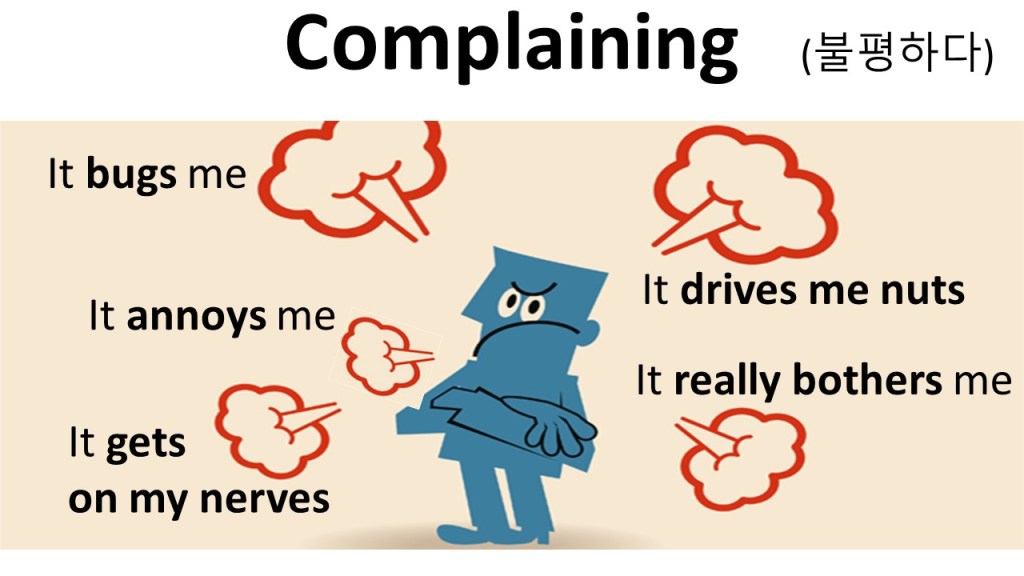
- Then elicit Complaining, which should be the final word, along with its Korean translation, to appear on the screen.
II. PROS AND CONS OF COMPLAINING (3 min)
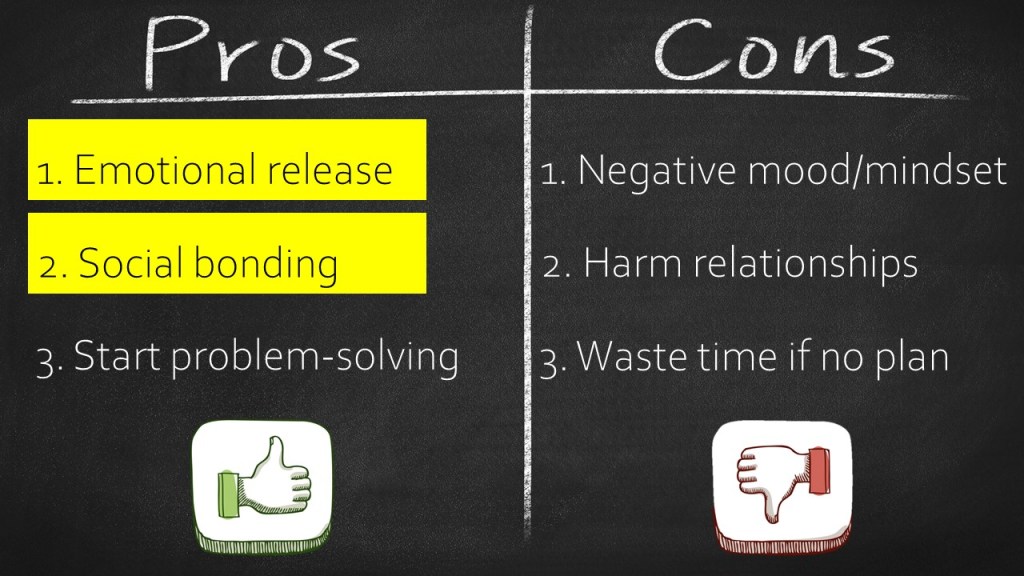
- Ask students to think about the Pros and Cons of complaining
- Quickly elicit 1 or 2 answers from different students and then show the 3 Pros and 3 Cons I’ve identified.

- Tell students that today our intention is focus on the Emotional Release and Social Bonding aspects of complaining.
III. WHAT ARE (OUR) PET PEEVES? (14 min.)
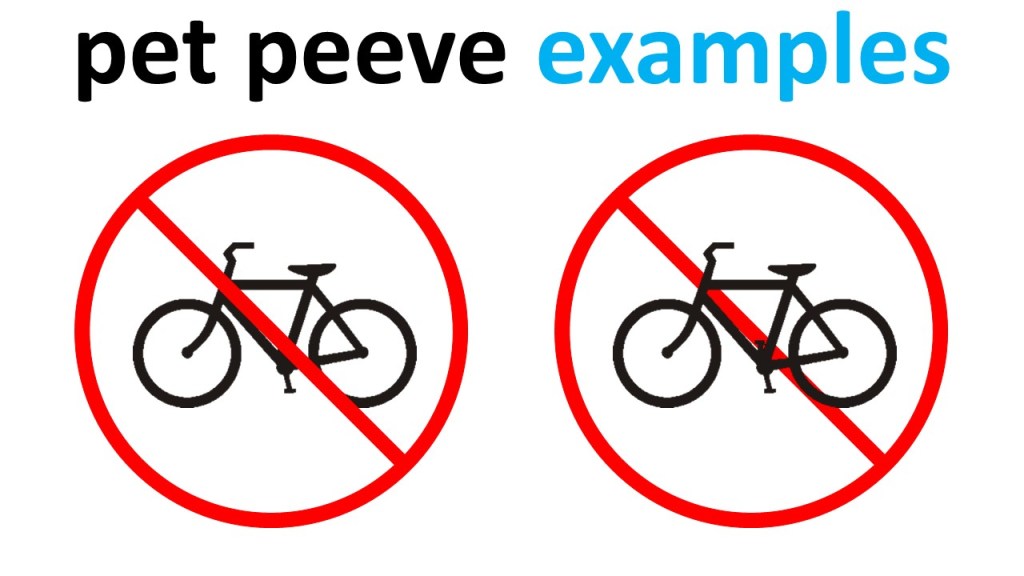
- Introduce the concept of pet peeves, with your own personal examples. Some of my pet peeves include misspellings on store signage, bakery tongs that are too slippery, and “Do Not” symbols in which the thing we are supposed to not do is in front of the diagonal red line, rather than behind it. I know, I’m crazy!
- Before sharing your examples, mention to students that they will soon share their own. This will enable them to start thinking about their own pet peeves in advance of actually writing them down.


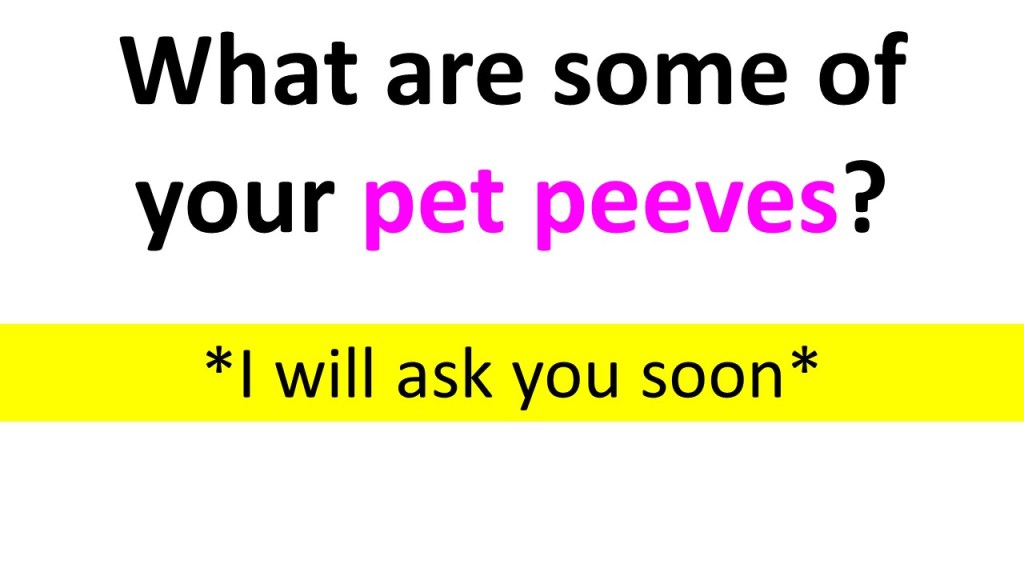





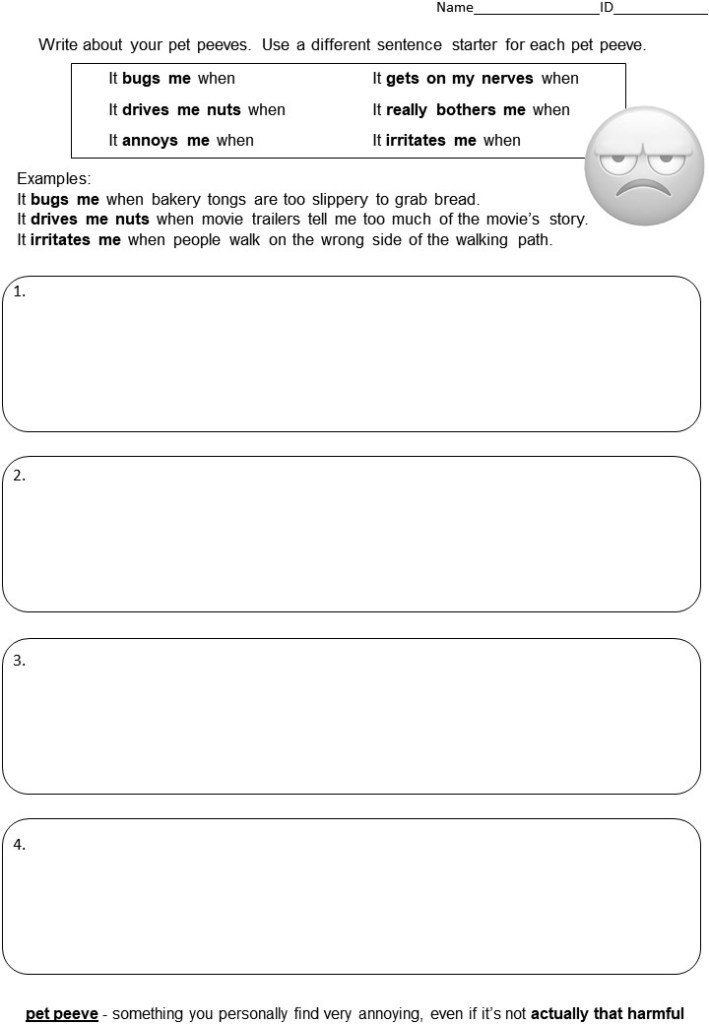
- Hand out the following page for students to complete. Here they will use the language we warmed-up with at the start of class. Some students will think of 4 (or more), some fewer, and that’s okay! As long as every student identifies and writes about at least 1 or 2 pet peeves, that’s enough.
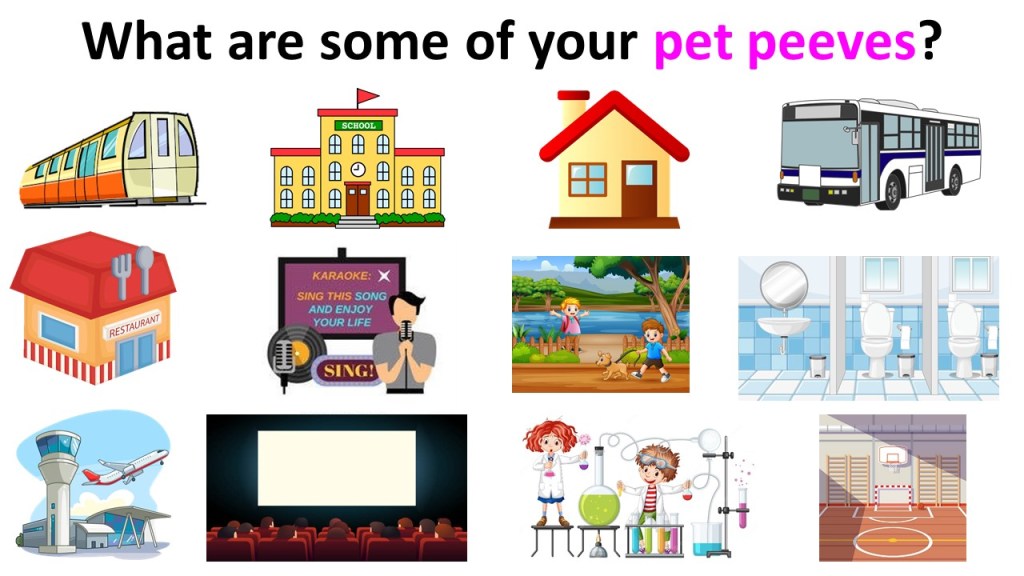
- To spark their memories, show students images of a variety of locations where pet peeves might occur
IV. MINGLE ACTIVITY (10 min.)
- Now that students are armed with several pet peeves to complain about, it’s time to share them with their classmates. Introduce the mingle activity with the following instructions and handout:
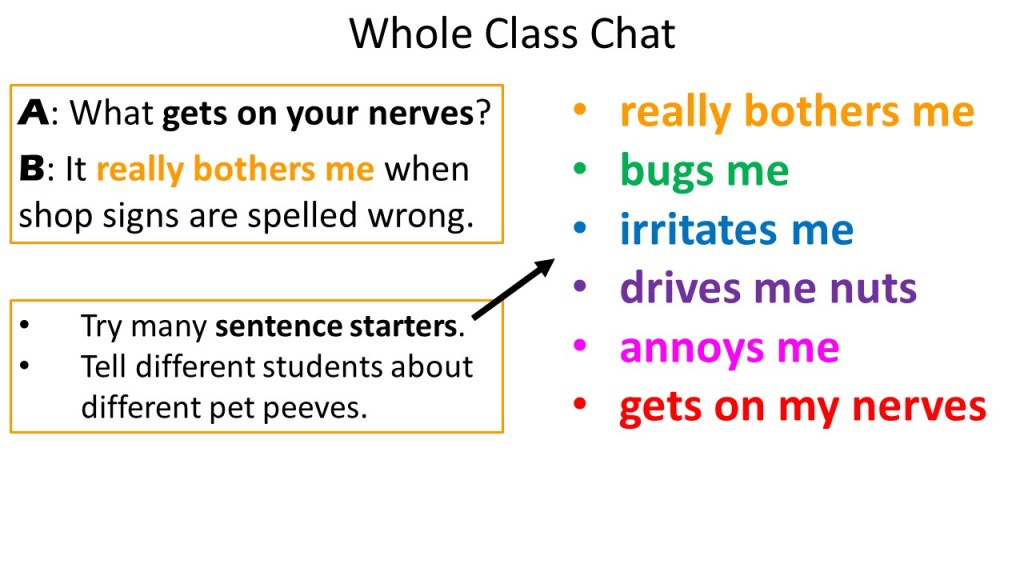

- As students are mingling, encourage them to talk to and exchange pet peeves with as many students as possible.
V. PLENARY (10 min)
- Come together as a whole class again, and ask a variety of students to tell about the pet peeves their classmates told them. Ask follow-up questions to both the “reporters” and the “subjects”.
- NOTE: The duration of both the mingle activity and the plenary could be increased by ~5 minutes, in which case, the lesson could end here. However, here’s how I prefer to finish class:
VI. DUDE PERFECT VIDEO BINGO
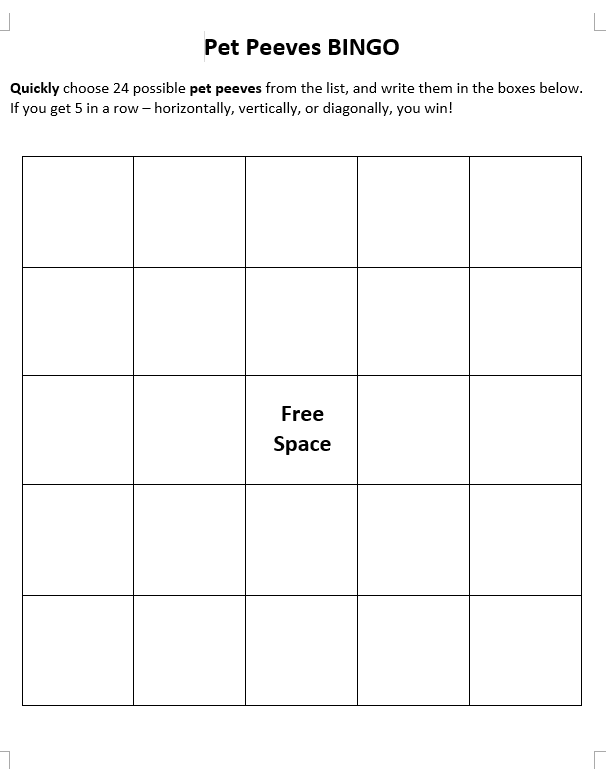
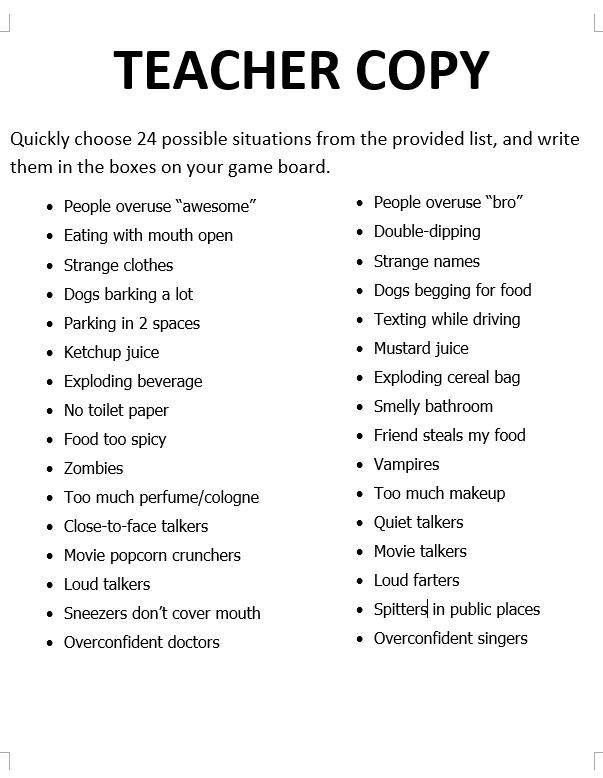
- Have students make Bingo cards that combine pet peeves that appear in Dude Perfect’s “Pet Peeves” music video and also ones that do not appear. Then watch the video and have students track the pet peeves on their Bingo cards.
- Post-watching: Because the video is fast-paced, review the pet peeves that appeared, and then award Bingo winners.
 Busan Teacher