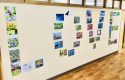
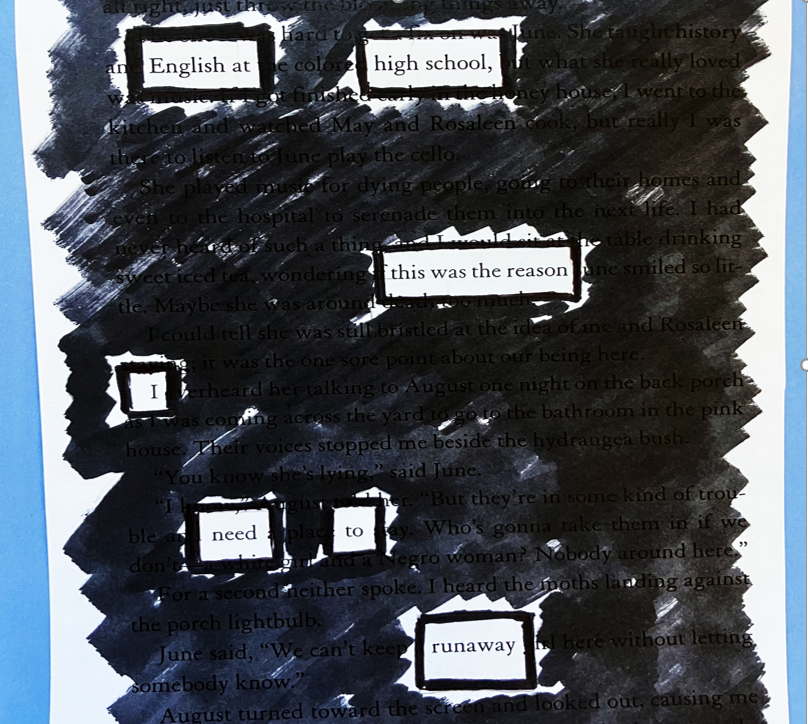
Finally, one for the introverts! In this versatile ELL lesson, students go on a treasure hunt of sorts to find hidden poetry embedded in everyday text – newspapers, magazines, books, whatever you can get your hands on. The only real preparation the lesson requires is the acquisition of supplies (text pages, markers, glue, scissors, colored paper). The lesson is adaptable to any classroom and all levels of students, from beginner to highly advanced.
Language Level: All levels
Time: 50 minutes
I. INTRO TO BLACKOUT POETRY (5-10 min.)
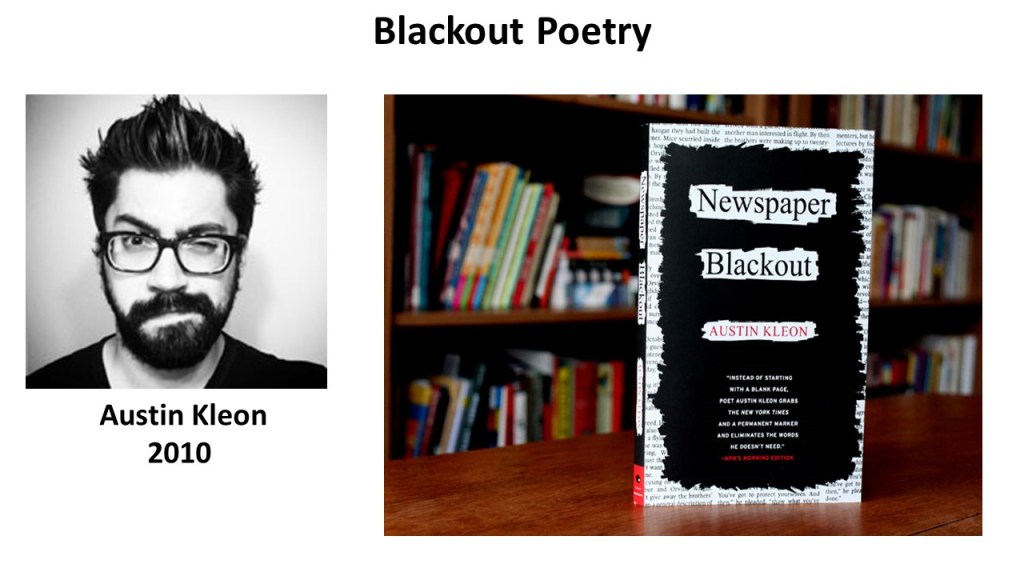
- Create a PPT to introduce the concept and origin of blackout poetry. See below for example slides:
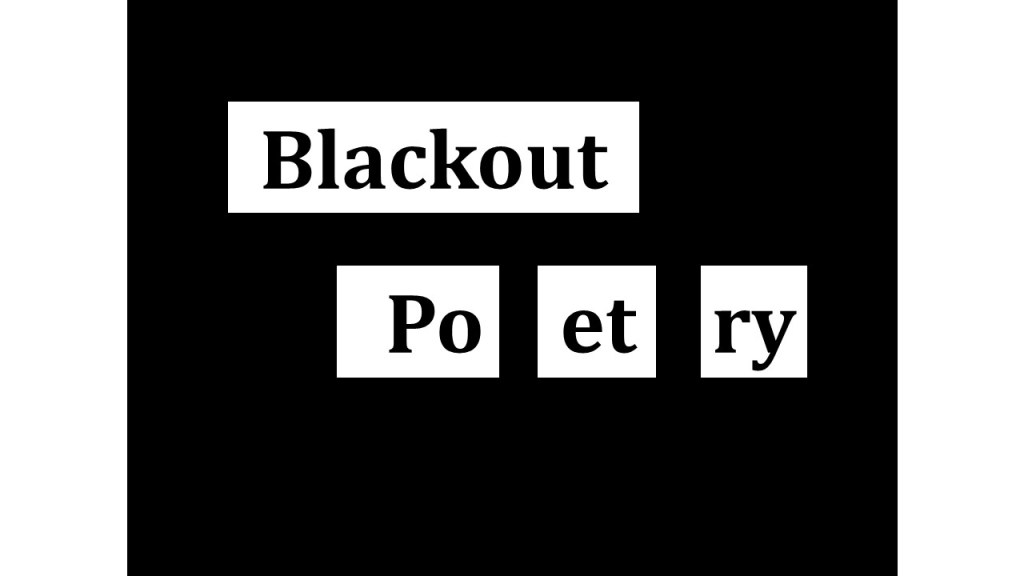
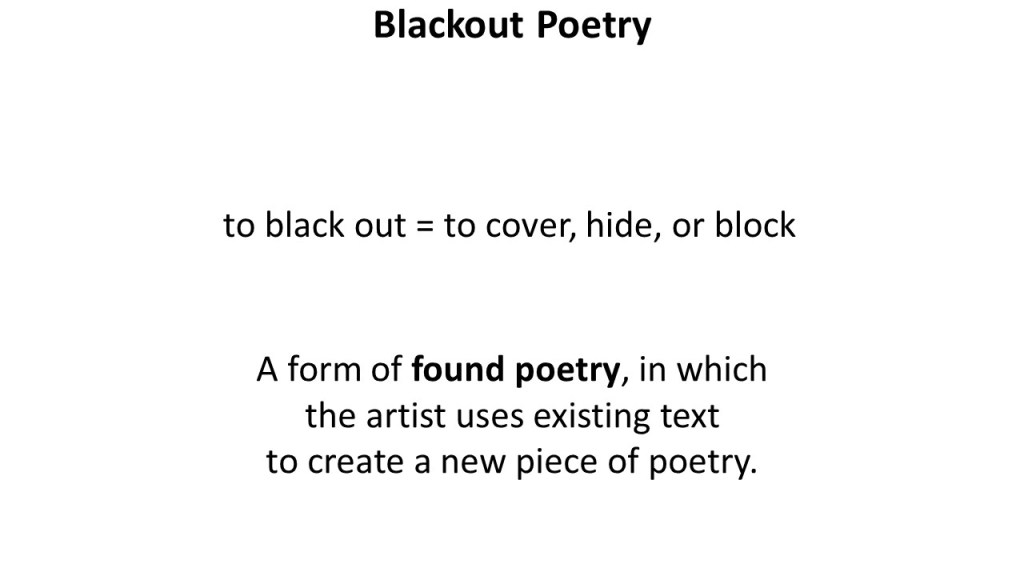
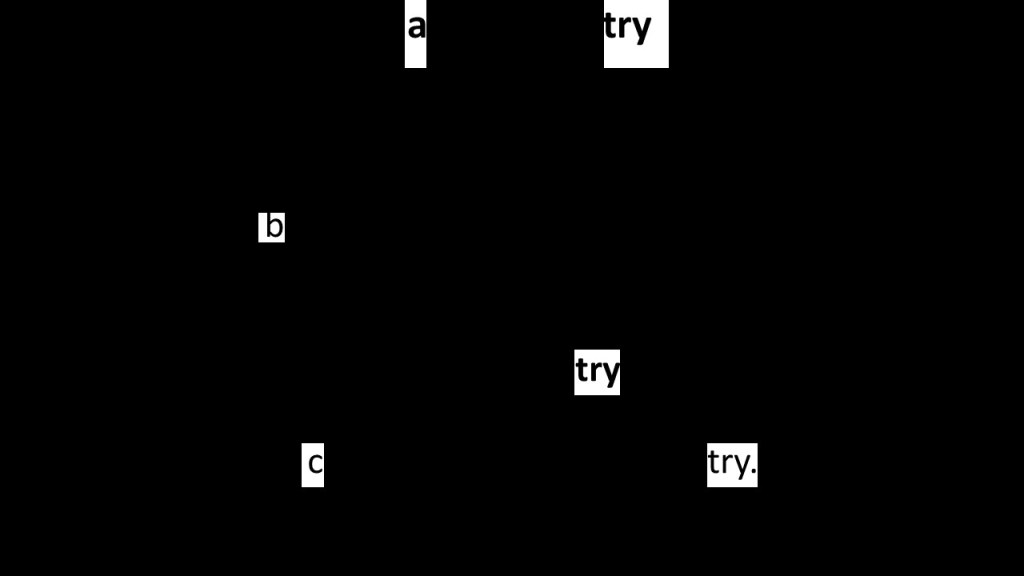
On the next slide, notice how I made a blackout poem using the text from the previous slide. This is how I model the concept for students.


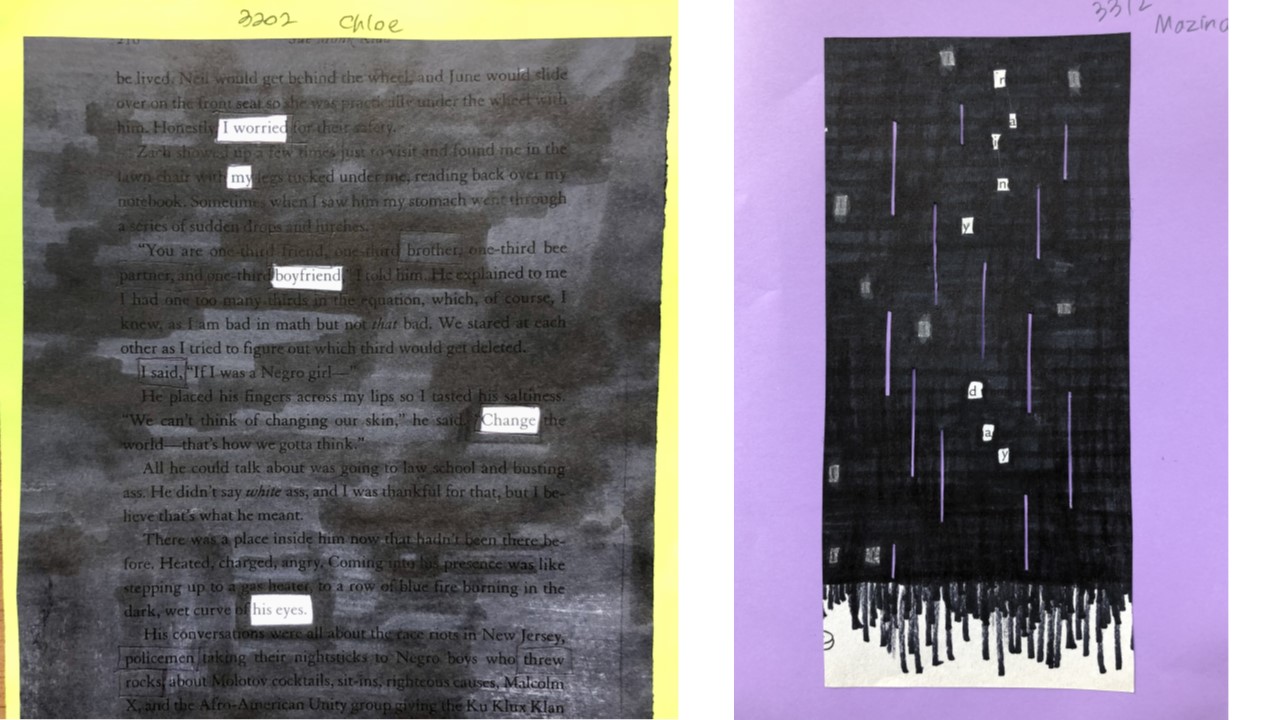



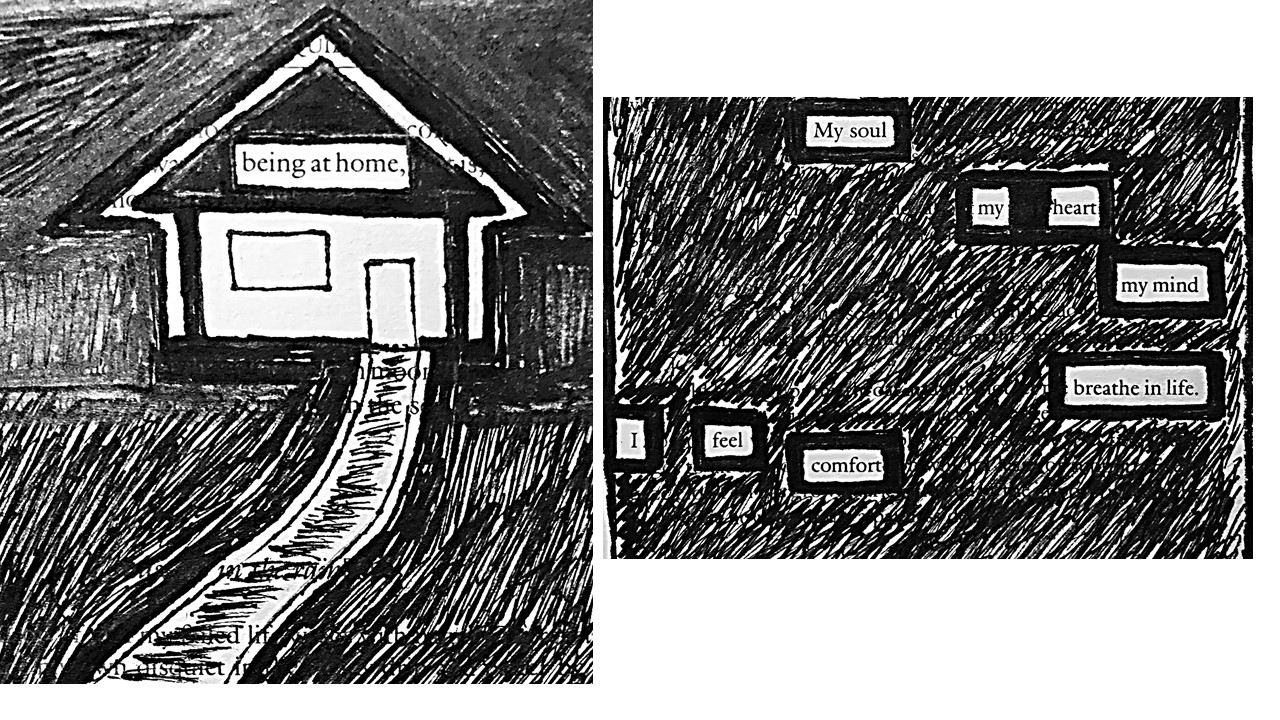
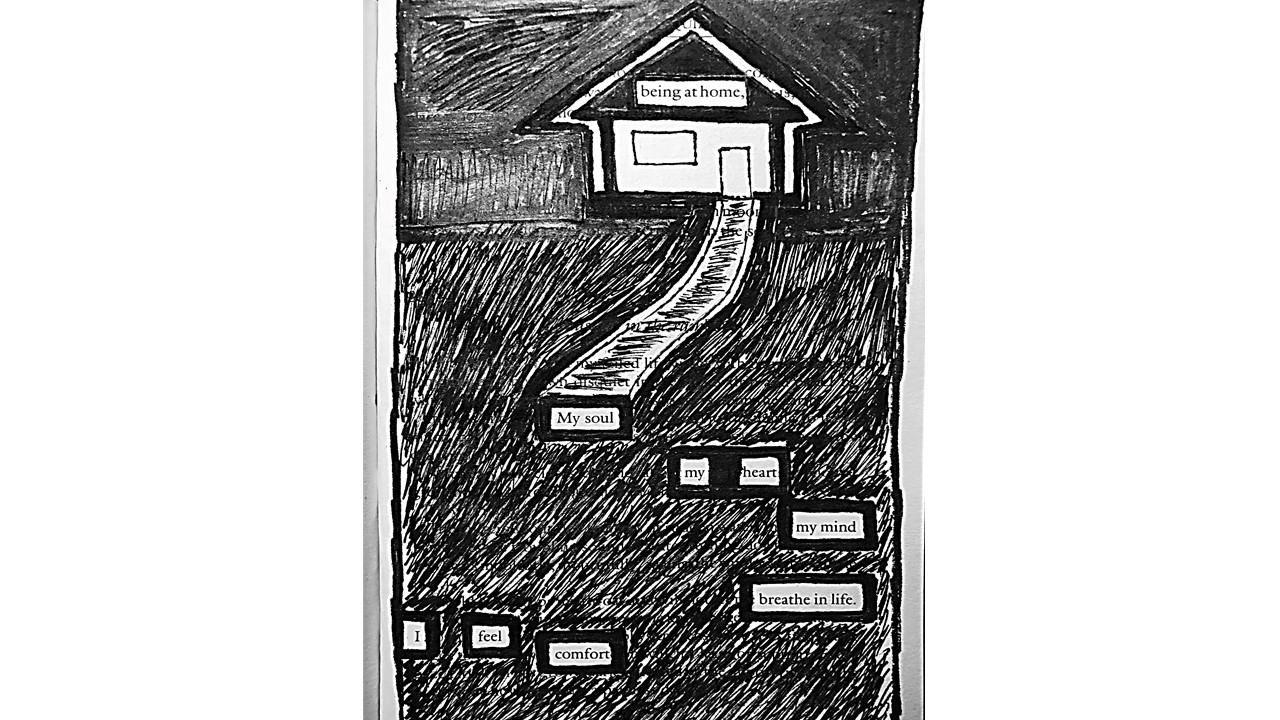


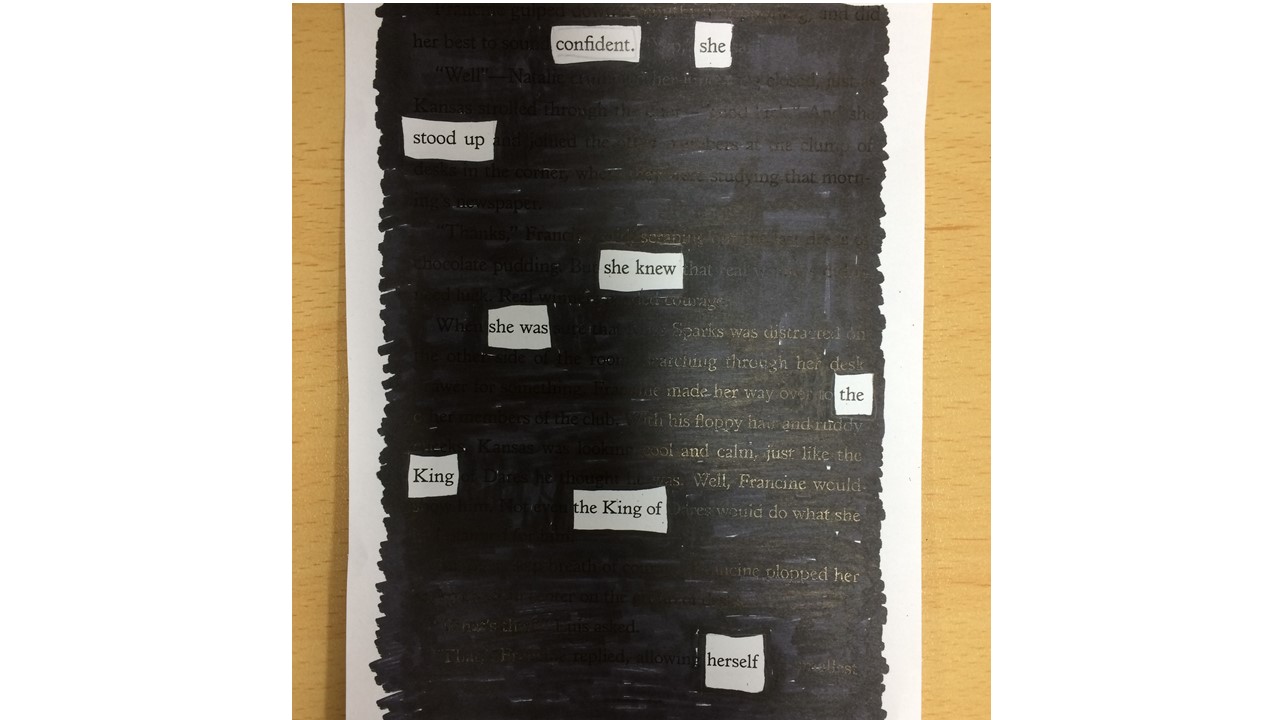
- After introducing the concept and sharing some samples, give students some suggestions before they embark on creating their art. Notice the last suggestion if you want to save the desks in your classroom from permanent marker stains.

II. FINDING and CREATING (~35 min.)
- Give students the necessary supplies and let them play with the text. You’ll be amazed by what they come up with. I always tell students to spend some time exploring the text, BUT ALSO, if nothing is jumping out or they’re not “feeling” that particular page, just try another one.
- While students are creating, walk around and chat with them. As students find their ideas, I try to visit each student and have them read their poems to me. It’s always fun to ask, “What do you see in your mind when you read this?” Often their interpretations of their work are different than mine, which I love.
III. SHARING (5-10 min.)
- You can formalize the sharing process to whatever degree you want. I’ve found that students naturally share their pieces with each other as class winds down.
- For shy students, who often come up with brilliant poems, I do try to encourage other students to check out their work.
- To wrap up class, I give students the option of keeping their poem or donating it to me (for display purposes and/or to use as samples for future students).

 Busan Teacher