

This low-tech and versatile ELL lesson structure can be used with classes of different sizes and ability levels, and with a huge range of topics. Students practice making predictions and formulating and expressing opinions. In this lesson, I’ll show the basic structure. In the next post, I will show how to apply the structure to a different lesson.
Language Level: Beginner/Intermediate/Advanced
Time: 50 minutes
I. WARM-UP (5 min)
- With students seated in pairs or at individual desks, ask the class: “What do you think I am most afraid of?” Give students some thinking time and then have them shout out answers and compile a list on the board.
Example student responses: spiders, coronavirus, horror movies, speaking Korean




II. PRESENTATION (5-10 min)
- Choose one and ask the student, “Why do you think I’m afraid of speaking Korean?” They might explain by saying, for example, “because you don’t know enough words.” Ask a couple more students and record all the responses on the board, like this:
I think Josh is afraid of speaking Korean because …
– he doesn’t know enough words.
– he speaks too slow.
– he speaks like a child.
– he doesn’t want his students to know how much he understands.
- Tell students to practice making complete sentences to express these opinions by using the above language, alternating sentences with the person next to them. Model with a student like this:
A: I think Josh is afraid of speaking Korean because he doesn’t know enough words.
B: I think Josh is afraid of speaking Korean because he speaks too slow.
A: I think Josh is afraid of speaking Korean because he speaks like a child.
B: I think Josh is afraid of speaking Korean because he doesn’t want his students to know how much he understands.
- Congratulate everyone for successfully using the language we will use in class today. Write “Predictions” on the board. Tell students they are going to make predictions about another student using the sentence structure we practiced.
III. MAKING PREDICTIONS (15 min)
- Give each student a number that corresponds to another student who is not sitting near them. Confirm students know who their partner is.
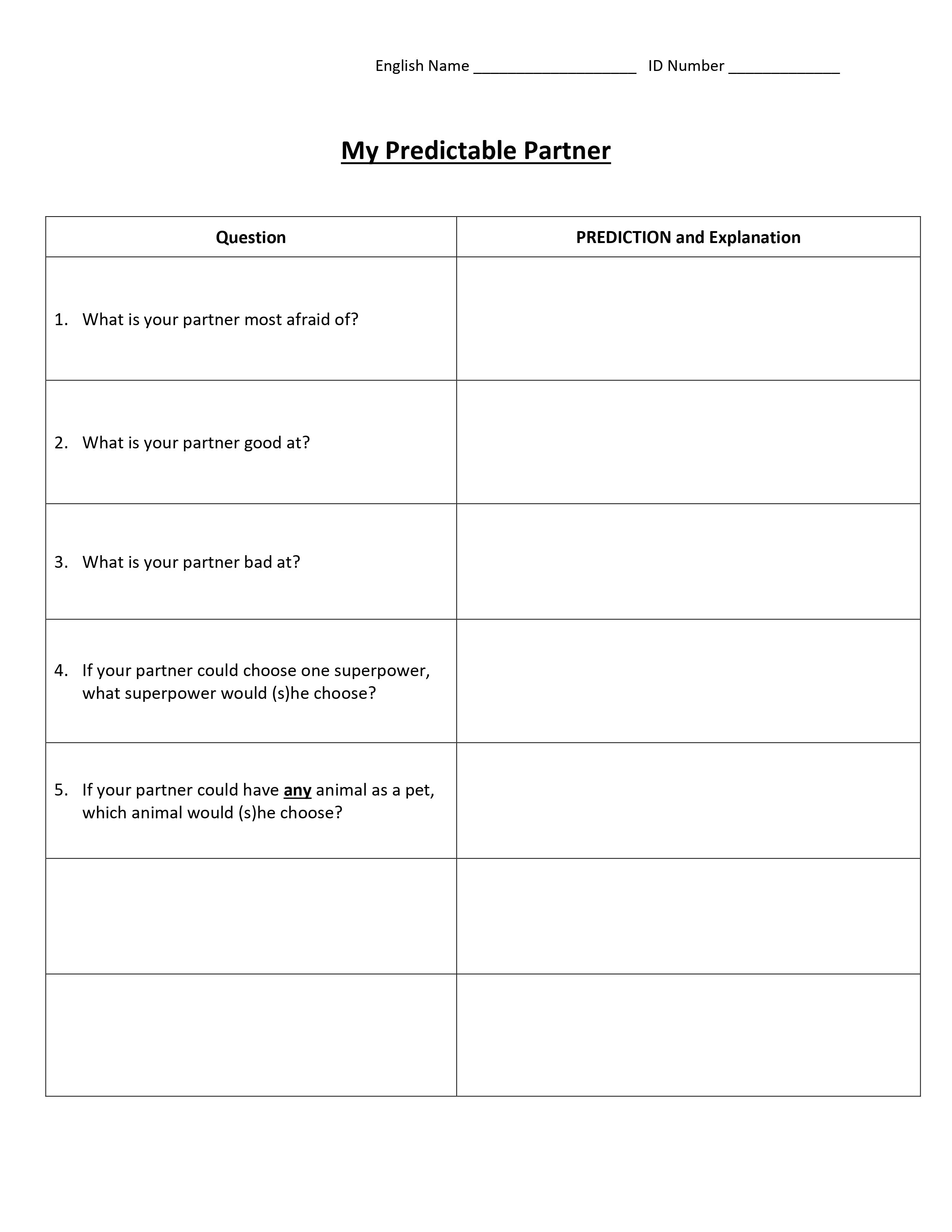
- Remind students of sentence structure, and tell them they will write complete sentences using the first handout. They cannot talk to their partner. Give students about 7-8 minutes to work silently. For early finishers they can create new questions in the open boxes at the bottom of the page.
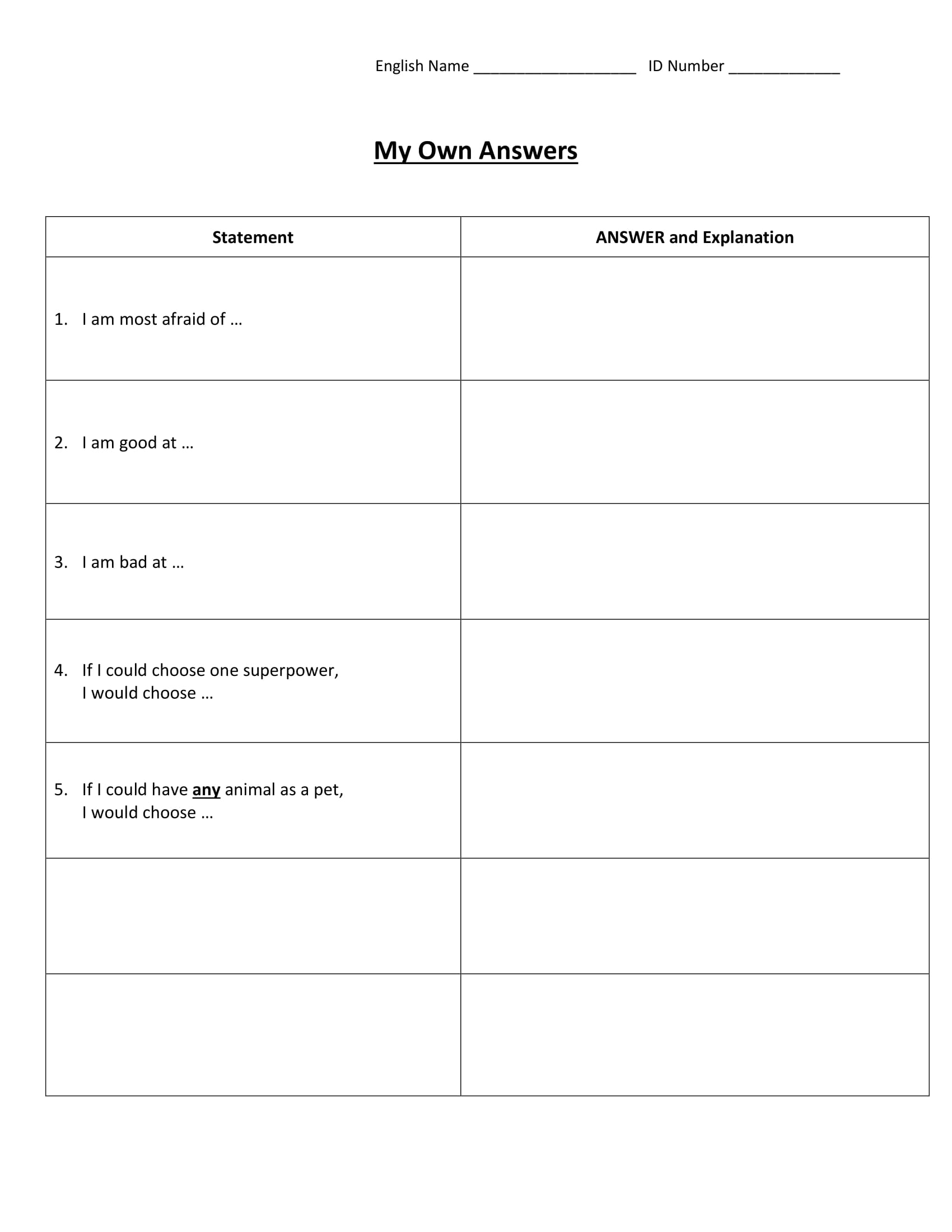
- As students finish, handout the second page and tell them to write their own answers. This time, they don’t have to write complete sentences.
IV. COMPARING and SHARING (20 min)
- Tell students to stand up and go sit next to their partner. They should compare their predictions with students’ own answers and find out where they were correct and/or incorrect.
- Survey the class to find out who knew each other the best by asking if anyone had 5 correct answers or 4, or 3, etc.
- Ask all the students to take a minute to scan their pages and find the most interesting or surprising bit of info they discovered after chatting with their partner. It could be a correct prediction or incorrect prediction.
- Ask various students to present what they found out and conduct a group chat.
Materials:
– Predictable Partner Handout 1
– Predictable Partner Handout 2
 Busan Teacher